Welcome to the Lagoon, where the future shows up early
Every January, the internet hands us a fresh stack of predictions. New platforms. New acronyms. New reasons to panic. Down here in South Florida, we read them the way we read a weather report during hurricane season: take them seriously, prepare well, and don't lose your sense of humor.
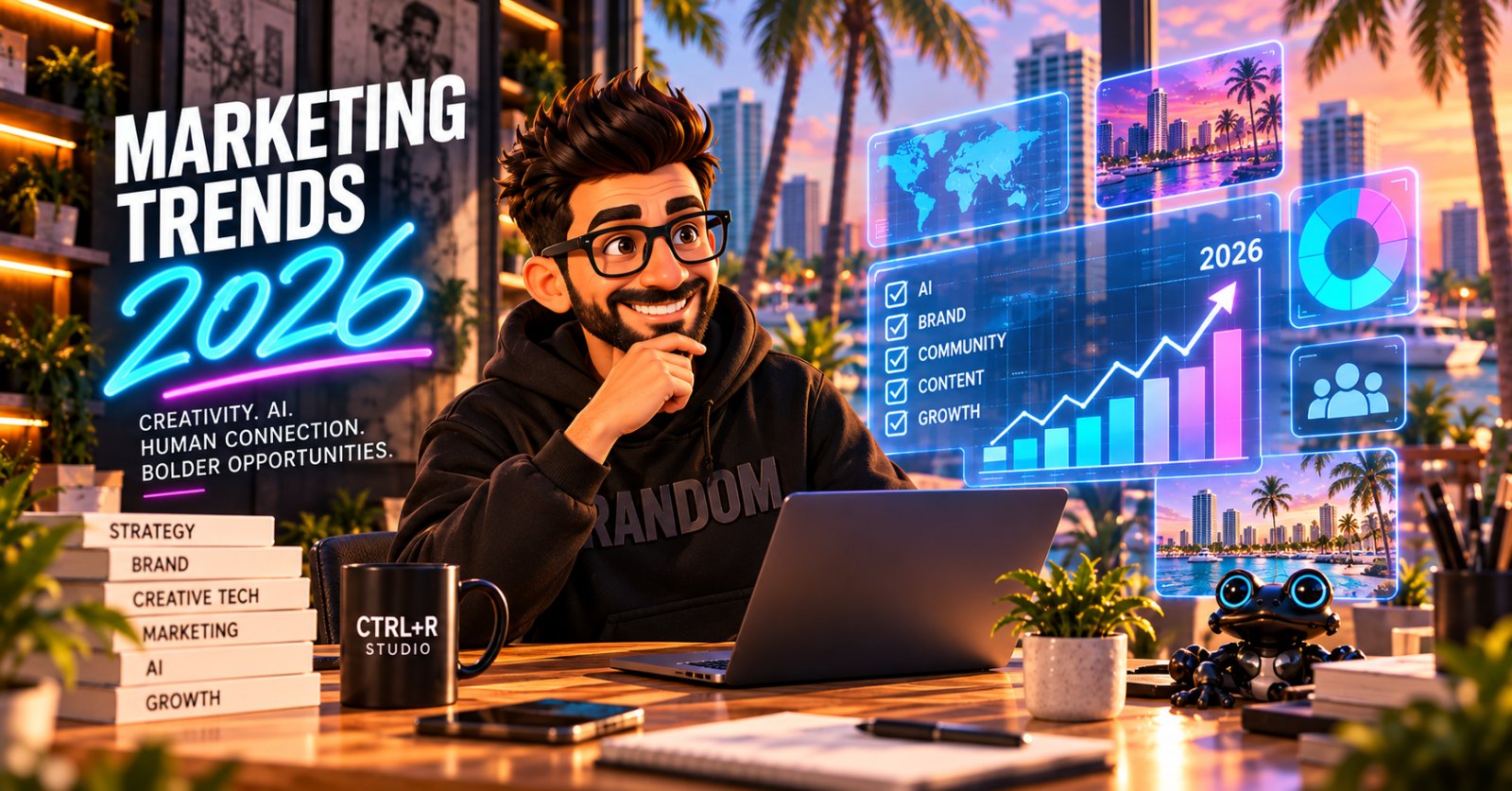
Here's the honest version of 2026. The tools got smarter. The audiences got pickier. And the brands winning right now aren't the ones shouting the loudest — they're the ones combining machine speed with a genuinely human voice. That's the thread running through every serious look at marketing trends 2026, including HubSpot's 2026 research, which points to AI adoption, automation, brand values, and an evolving search landscape as the priorities marketers keep circling back to. Different reports, same conclusion: technology sets the pace, but connection closes the deal.
Let's break down the five shifts that actually matter — and what to do about each one.
1. AI personalization grows up
Personalization used to mean dropping a first name into an email subject line and calling it a strategy. In 2026, AI lets you adapt offers, creative, and timing to what a person actually cares about — a returning customer sees something different from a first-time visitor, and both feel like the message was meant for them.
But there's a line. Personalization that helps feels like service; personalization that watches feels like surveillance. The brands doing this well are transparent about the data they use, generous with the value they return, and quick to let customers adjust their preferences. Think less "we know where you live" and more "we remembered what you loved last time."
The move: audit one customer journey — just one — and ask where a thoughtful, AI-assisted touch would remove friction. Start with your highest-traffic page or your most-opened email, not your whole funnel.
2. Search is no longer a list of links
Search behavior is changing fast. AI-generated answers now sit at the top of results pages, and people increasingly ask questions in full sentences — to search engines, voice assistants, and AI tools alike. That means your content has to do two jobs: rank in traditional results and be clear, trustworthy, and structured enough to be quoted as an answer.
This isn't the death of SEO; it's SEO growing up. We dig into the practical side in our 2026 SEO playbook — intent, structure, internal links, and schema — but the headline is simple: write for humans first, structure for machines second, and never publish a page that only a robot would enjoy reading.
3. First-party data is the new media budget
Third-party tracking keeps shrinking, which makes the data your customers willingly share with you — email signups, purchase history, preference quizzes, loyalty programs — the most valuable asset on your balance sheet. It's also the most ethical foundation for personalization, because it starts with consent.
The catch: people trade their information for value, not for vibes. A genuinely useful guide, early access, a birthday perk, a tool that makes their life easier — those earn the signup. A pop-up that ambushes them earns a closed tab.
The move: give every email capture on your site a clear promise, and keep the promise in the very first email you send.
4. Short-form video is the storefront
For most consumer brands, the first impression no longer happens on your homepage. It happens in a fifteen-second vertical video, mid-scroll, with the sound possibly off. Short-form video is where people discover you, judge your energy, and decide whether you're worth a second look.
The good news: production value is not the gatekeeper anymore. Clarity and personality are. A founder explaining one idea well, a real customer moment, a quick behind-the-scenes — these outperform polished ads that say nothing. (Around the Lagoon, even The Coquí has strong opinions about hooks in the first three seconds.)
The move: commit to a simple cadence — two or three short videos a week built from questions your customers already ask — and repurpose the winners into ads, emails, and your website.
5. Human-centered branding is the differentiator
When everyone has access to the same AI tools, sameness becomes the default. Logos blur. Copy blurs. What doesn't blur is a brand with a point of view, a community, and a recognizable world. That's why brand values show up so prominently in current research: people buy from companies they can describe in one sentence and trust in a storm.
You can see this principle at work in trust-heavy industries. Our look at financial services content marketing shows how clarity builds confidence, and our piece on medspa marketing strategy makes the same point for local, personal services: pretty content opens the door, but trust is what walks through it.
The move: write down the three things your brand will never do. Constraints create character, and character is what people remember.
6. Automation is the plumbing, not the personality
One more trend hides underneath the other five: automation quietly became the plumbing of modern marketing. Follow-ups fire on time, inquiries get routed, appointments get confirmed, reports assemble themselves. None of that is glamorous, and all of it matters — a lead answered in five minutes lives in a different universe from a lead answered tomorrow.
But plumbing is not personality. Automate the repetitive work so your humans have time for the work only humans do: the judgment call, the honest answer, the creative swing. The brands that get this balance right feel responsive and real. The ones that automate the relationship itself end up with very efficient silence.
Your Monday-morning checklist
- Pick one journey and add one thoughtful personalization touch.
- Rewrite one key page so a human — and an AI answer engine — can summarize it in two sentences.
- Strengthen one first-party data offer with a clear, kept promise.
- Film two short videos from real customer questions.
- Sharpen the one-sentence description of what your brand stands for.
One last thing, because it decides whether any of the above works: consistency beats intensity. A modest strategy executed every week for a year will quietly bury a brilliant strategy executed for three loud weeks in January. The trends above reward the brands that show up — helpful, recognizable, and human — long after the prediction posts are forgotten. That's not the flashy answer. Down here, where the afternoon storms roll in right on schedule, we've learned to respect the things that show up every day.
None of this requires a bigger budget. It requires a clearer strategy — which is exactly the work we do every day at CTRL+R Studio, the creative and technology arm of Lagoon of Randomness here in South Florida.
Ready when you are: Build your 2027-ready marketing strategy with CTRL+R Studio.
Build your 2027-ready marketing strategy with CTRL+R Studio →